

Most fire pit frustration starts in the first ten minutes. You light the paper, the flames leap up, everything looks promising — and then, quietly, it all fizzles into smoke. You add more wood. It smoulders. Someone suggests lighter fluid. The evening's momentum is gone.
The good news: a fire pit that stays lit isn't about luck or lighter fluid. It's about three things — dry wood, proper airflow, and the right build order. Get those right and you'll have a clean, steady fire in under fifteen minutes, every time.
Start with dry wood. Really dry.
Firewood needs to be properly seasoned — meaning it's been split and dried for at least a year, ideally two, with moisture content below 20%. Wet or "green" wood doesn't just burn badly; it's the single biggest reason fires die young. The energy from your flame gets spent evaporating water instead of producing heat.
A quick field test: knock two logs together. Dry wood sounds sharp and hollow. Wet wood sounds dull. If you're buying firewood, ask the supplier for the moisture percentage — any serious seller will know.
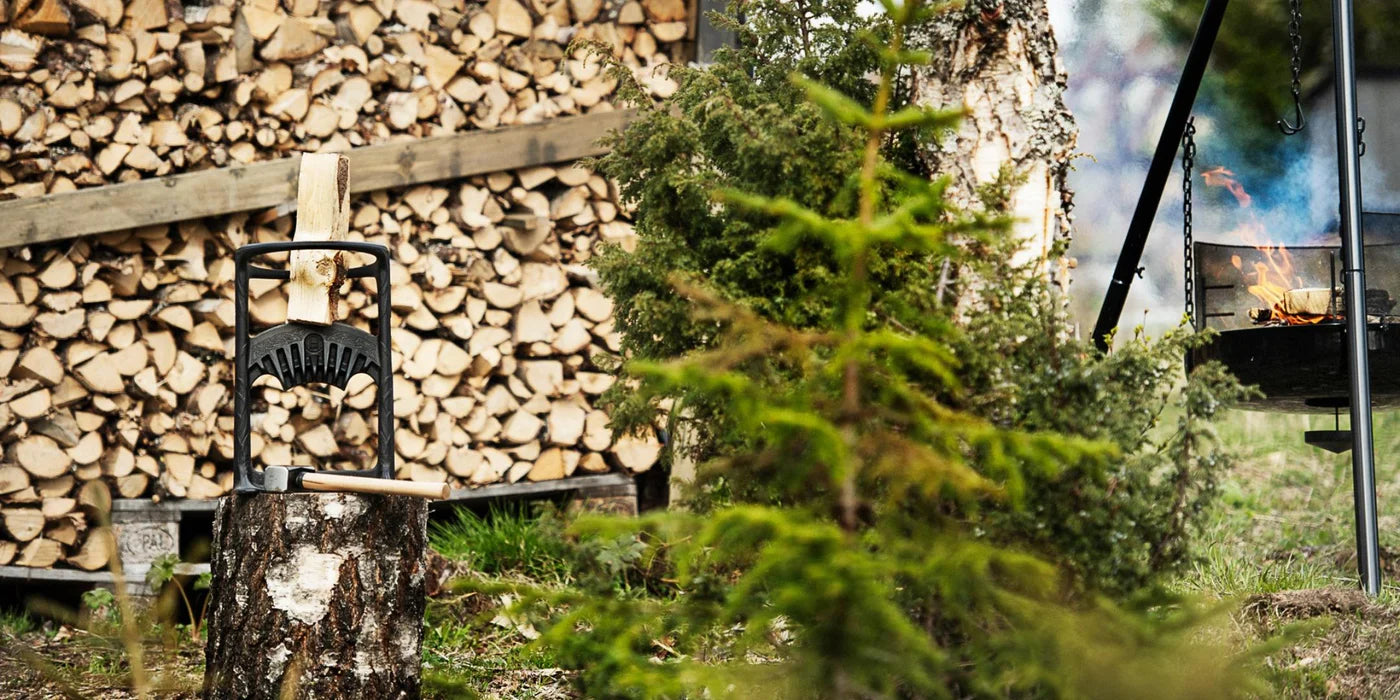
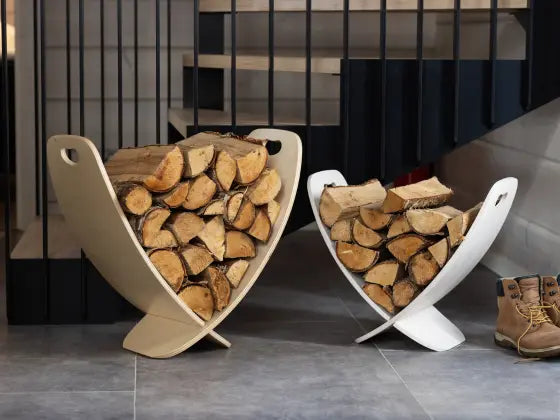
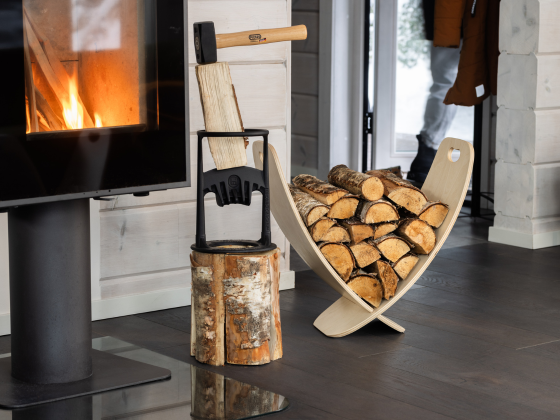
Store your wood off the ground and under cover, but with airflow on the sides. A proper firewood stand does both jobs at once — it keeps the logs dry and lets air circulate around them, which is why we designed the Nordic Embers range the way we did.
Build from the bottom up — in the right order.
Forget everything you've seen in films where someone tosses a log onto some paper. A fire needs to climb through stages, and each stage needs to be ready before the last one burns out.
The reliable method:
- A loose ball of newspaper or natural firelighter at the base.
- A generous handful of kindling on top — small, thin, dry sticks about the thickness of a pencil.
- A few slightly thicker pieces of wood above that, arranged in a loose criss-cross.
- Your main logs added only once the kindling is properly burning.
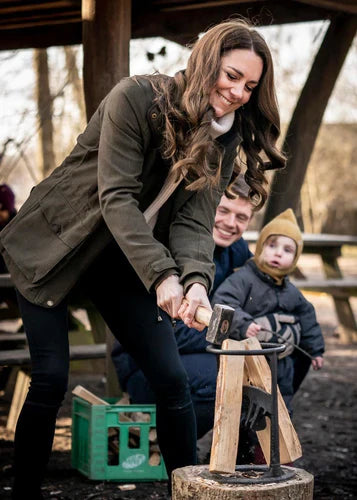
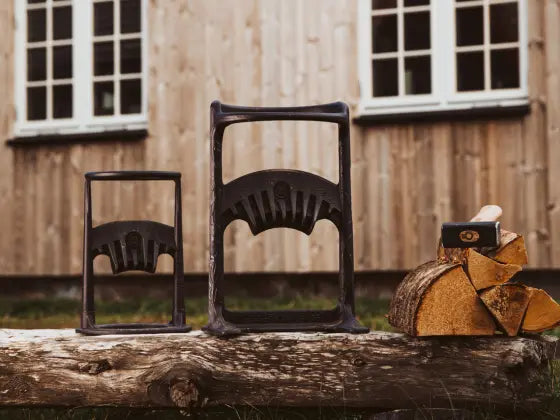
Most failed fires skip step two. People underestimate how much kindling a fire actually needs. A proper handful isn't ten sticks — it's closer to thirty. This is where a Kindling Cracker earns its keep: splitting kindling by hand or with an axe is slow and discouraging, so most people don't make enough. With a Cracker, you can produce a full basket in minutes.
 Respect the airflow.
Fire needs oxygen, and oxygen needs space. Pack your fuel too tight and the fire suffocates. Space it too loose and the heat escapes before it catches the next piece. The criss-cross method works because it leaves natural channels for air to rise through.
If your fire looks like it's dying, resist the urge to add more wood. Add air instead — gently blow at the base, or use a bellows. Nine times out of ten, that's what the fire actually needs.
When to add the bigger logs.
Wait for a proper bed of glowing embers before adding anything thick. Embers are what actually produce heat — flames are just the visible part of the process. A fire with a deep ember bed will catch even mediocre logs and burn them cleanly. A fire without embers will reject even perfect ones.
Once you've got that ember bed, you can pretty much ignore the fire for half an hour at a time. Add a log when the flames drop. That's it.
A quick word on firelighters.
Natural firelighters — wood wool, wax-and-shaving blocks, that sort of thing — are worth the small extra cost. They burn longer and hotter than newspaper, and they don't leave the chemical aftertaste that petroleum-based cubes can give food if you're grilling nearby. We make our own Nordic Embers Natural Firelighters for exactly this reason.
 The honest summary.
A fire that stays lit isn't a skill. It's a checklist: dry wood, enough kindling, proper airflow, patience through the first ten minutes. Once those four things are in place, the fire takes care of itself — and so does the evening.
Frequently asked questions:
Why does my fire pit keep going out?
Nine times out of ten, it's one of three things: the wood is too wet, there isn't enough kindling to bridge from flame to logs, or the fuel is packed too tightly and the fire is suffocating. Check those in order before assuming anything more complicated is going on.
Can I use normal firewood as kindling?
Not directly — standard firewood logs are too thick to catch from a small flame. You need to split them down into pencil-thin pieces first. You can do this with a hatchet, but it's slow and carries a real risk of injury. A Kindling Cracker does the same job in seconds without swinging a blade.
Is it safe to use lighter fluid in a fire pit?
We'd avoid it. Lighter fluid produces unpleasant fumes, can flare unpredictably, and leaves a chemical taste on anything you grill nearby. Natural firelighters — wood wool, wax-and-shaving blocks — light just as reliably, burn longer, and don't contaminate the fire.
How long should a fire pit fire last on one load of wood?
A properly built fire with three to four medium hardwood logs should burn steadily for around 60–90 minutes before needing another log. If yours is burning through much faster, the wood is likely too dry, too soft, or too small — or there's too much airflow hitting it directly.